The Māori Haka: A Powerful Ceremonial Dance of Tradition and Unity
Over the past few weeks one video clip from a New Zealand parliament session has been doing the rounds through social media where a young MP (21 year old, Hana-Rawhiti Maipi-Clarke) is delivering her maiden speech. The opening minute or so of this speech is very power packed and intriguing display of what looks like chanting or shouting, but I wasn’t sure what it was or what her intention in saying it meant. Here is the video I am talking about. I read about it to find out more and here is what I found.
At the very core of Māori culture in New Zealand is a dance that has stood the test of time and come to represent strength, solidarity, and national pride. Over the course of several centuries, the Maori Haka — a traditional ceremonial dance — has transformed into something that is equally at home on the battlefield as in international arenas.
From Fields of Combat to Stadiums
Picture this, Māori fighters, their traditional garb revealing their chiselled features and elaborate facial paint, standing tall and proud. They are prepared to protect their tribe with the weapons in their hands. A dance known as the Haka, which was originally performed before war, is about to be performed by them. As a strategy for both psychologically and physically preparing the warriors for the impending battle, the Haka served as more than simply a demonstration of might. But that’s just one type of haka, there are others depending on the situation and ceremony. Often misunderstood as a war song, the haka is actually “a celebration of life” according to a Māori scholar Tīmoti Kāretu. At cultural events like weddings and funerals, haka is performed to welcome guests and recognize significant accomplishments, among other functions.
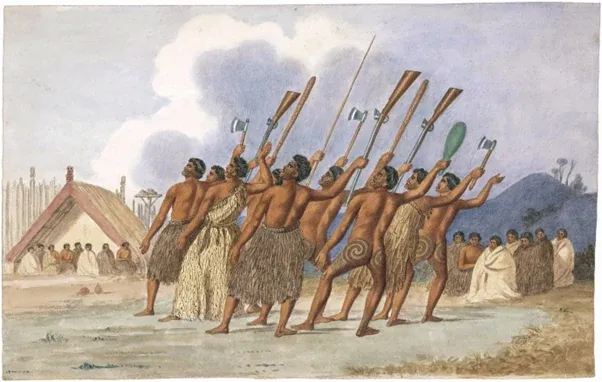
Once hidden from view in the shadows of civilization, the Haka are now shining brightly in the modern era. As a representation of Māori history and culture, it has taken on additional significance in recent years. Before each rugby match, the All Blacks, the national side of New Zealand, execute the Haka with tremendous pride and power, making them the most famous practitioners of the ritual. Everyone, from spectators to players, gets the chills at the sound of the resounding foot-stomping, rhythmic body motions, and ferociously yelled chants.
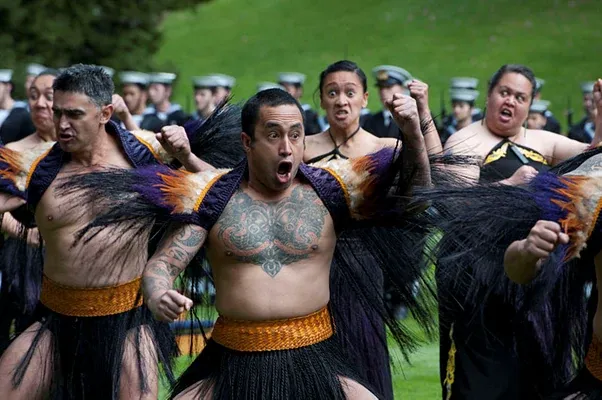
Dance as a Tool for Cultural Preservation
The haka was first seen by Europeans in the 18th century and reported as vigorous and ferocious. Not knowing what the entire performance encompassed there were attempts to eradicate the haka completely. Thankfully the Māori held onto their pride and continued the practice of haka which we see prevailing even today. Participating in the Haka is more than simply a physical act; it is a profoundly moving and spiritually transformative event. The many types of Haka include narratives about the tribe’s ancestors and pivotal moments in their history. In doing so, they poetically pay homage to their ancestors and bring the current generation closer to their heritage.
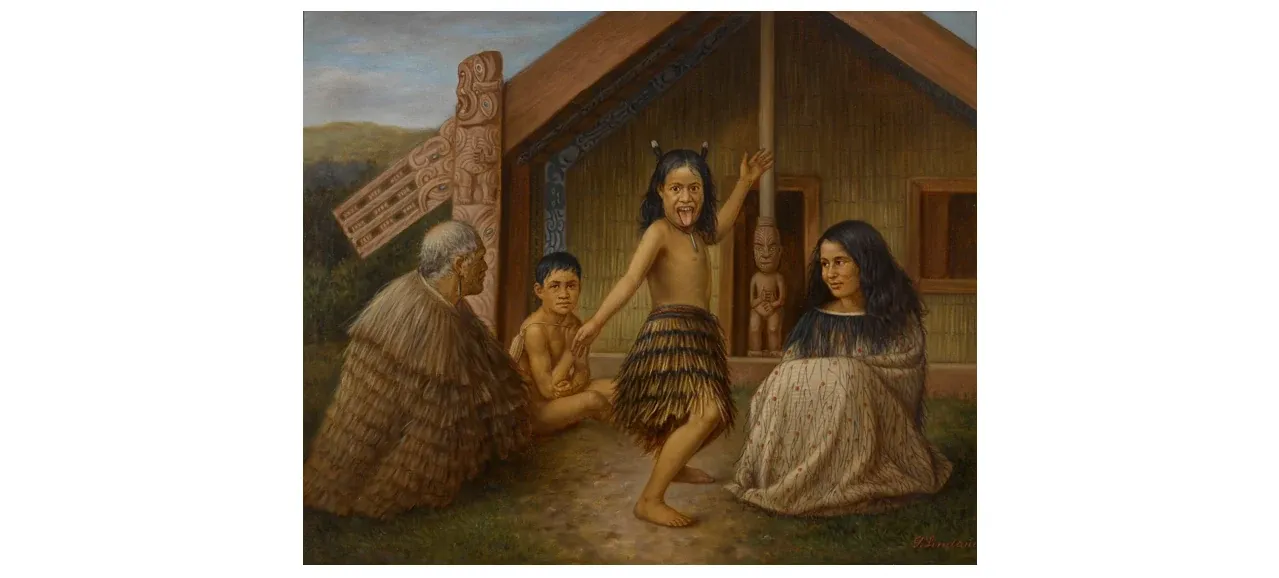
It is a tremendous honour for a Māori to perform the Haka. To them, it’s more than simply a dance; it’s a way of life. This is the Māori way of saying, “We are here, we are strong, and we are proud of who we are.”
In modern times, the Haka has become a staple at many different types of cultural celebrations. It’s a unifying symbol that pulls people together; it’s not confined to sporting competitions. When the Haka is sung, it gives the impression that the whole tribe is united in its struggle against adversity.
Even robots failed to Haka
In a research paper published by Springer in 2020, the authors proposed a program to teach robots to do the haka as an act of preservation. Reproducing the haka, according to the writers, is more than just mimicking physical movements; it also necessitates retaining the “intangible,” such as the cultural and emotional meanings encoded in the performance’s postures and gestures. Skillful haka performance is an expression of profoundly thoughtful, culturally shared meanings, which robots cannot yet reproduce.
It is hard to forget the Haka once you have seen it and now that you know, remember that the Māori Haka is more than a performance the next time you see it — at a cultural event or on a rugby field. It’s a representation of the strength and dignity of a people who have persisted in maintaining their culture and customs in the face of a world that is constantly evolving.
Thank you, Maipi-Clarke, for showing the world your pride in heritage and cultural identity. I read a few discussions about this viral video. Many Kiwis said that the haka is common in meetings, political speeches, rugby matches etc. and to them its normal doesn’t mean much. I am sure it means a lot to the Māori community. It means something to me too, inspiring, energizing and building up the fire to protect my oral traditions just like her.
If you are a Māori reading this, or anyone who knows about haka in depth, do let me know if my article speaks of the authentic meaning of the haka and if there are aspects I should add or correct here. I’d like to learn and share only the authentic values.
Further Readings: