Return of Rama to Janmabhumi Ayodhya
On 22 January 2024, the Hindu community around the world was joyous and celebrating as they would on any important festival for their religion. The day marks a historic event in religious tradition of Hinduism. Rama, an important deity in Hinduism whose temple was destroyed in 1528 was rebuilt again and opened to devotes on this very day.
For the Hindu population of India, the Ram Mandir — also known as the Ram Temple — holds religious, historical, and cultural significance. Lord Rama, the hero of the ancient Indian epic the Ramayana and a prominent figure in Hinduism, is said to have been born there (Janmabhumi — Birth place). Located in Ayodhya, Uttar Pradesh, the temple represents India’s long history of religious practice and sacred storytelling. After a long and complicated dispute, it is finally being built, and this is a time of great cultural, national, and religious importance. As a meeting place for religious sentiments and communal harmony in India’s varied fabric, it represents the pinnacle of centuries-old beliefs and the meeting place of religion and history.
In Hindi this event is called “Ghar Wapasi” which literally translates to homecoming. The Hindu community all over the world associates this re-establishment of the temple in Rama place of birth as his homecoming.
The actual Ghar Wapasi was when Ram, Sita (Ram’s Wife) and Laxman (Ram’s Younger Brother) returned from their 14 years exile to Ayodhya. This was a historic moment because Ayodhya had prepared for the coronation (Pattabhisheka) of Ram as the King. The majesty of this event called out to many artists who represented this day in their own imaginations. Here are a few paintings of the artist’s interpretation of Ram’s Pattabhisheka. All these representations have Ram, Sita, Laxman, Bharat, Shatrughan (Other two younger brothers of Ram) and Hanuman (Ram’s most ardent devotee).
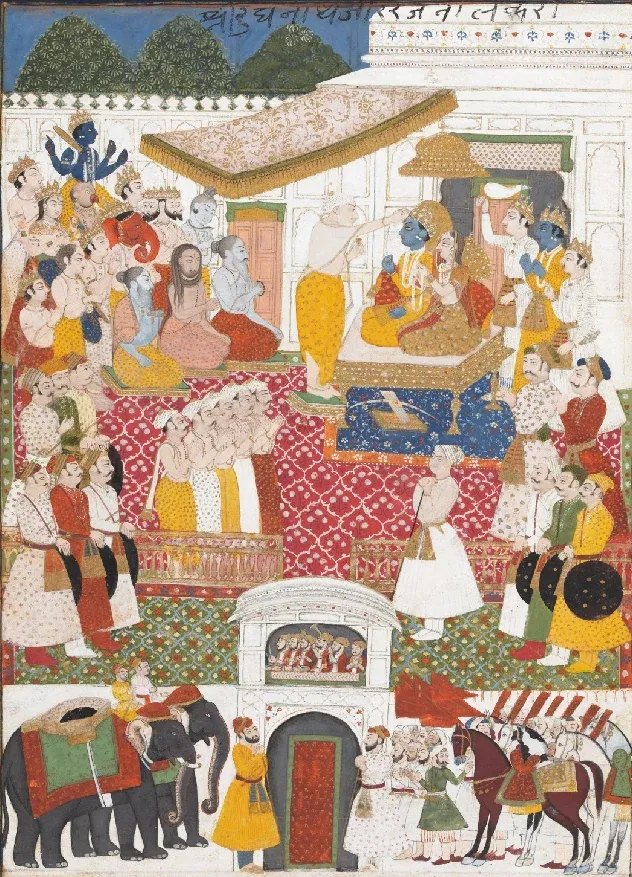
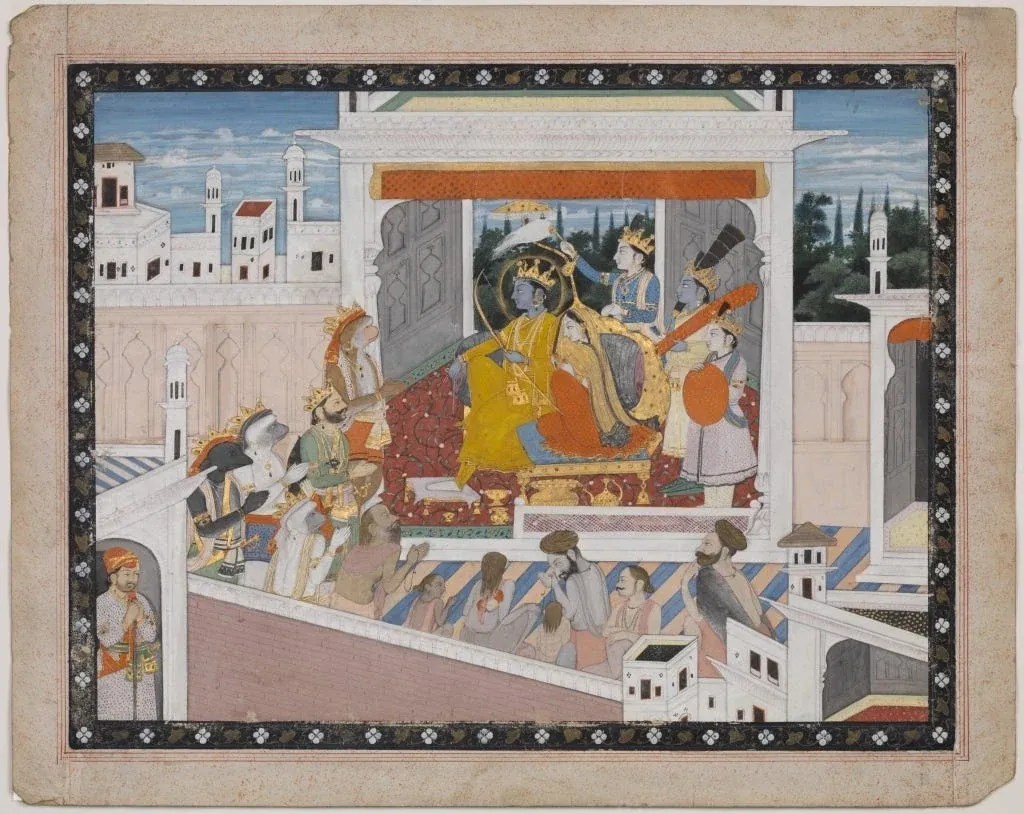
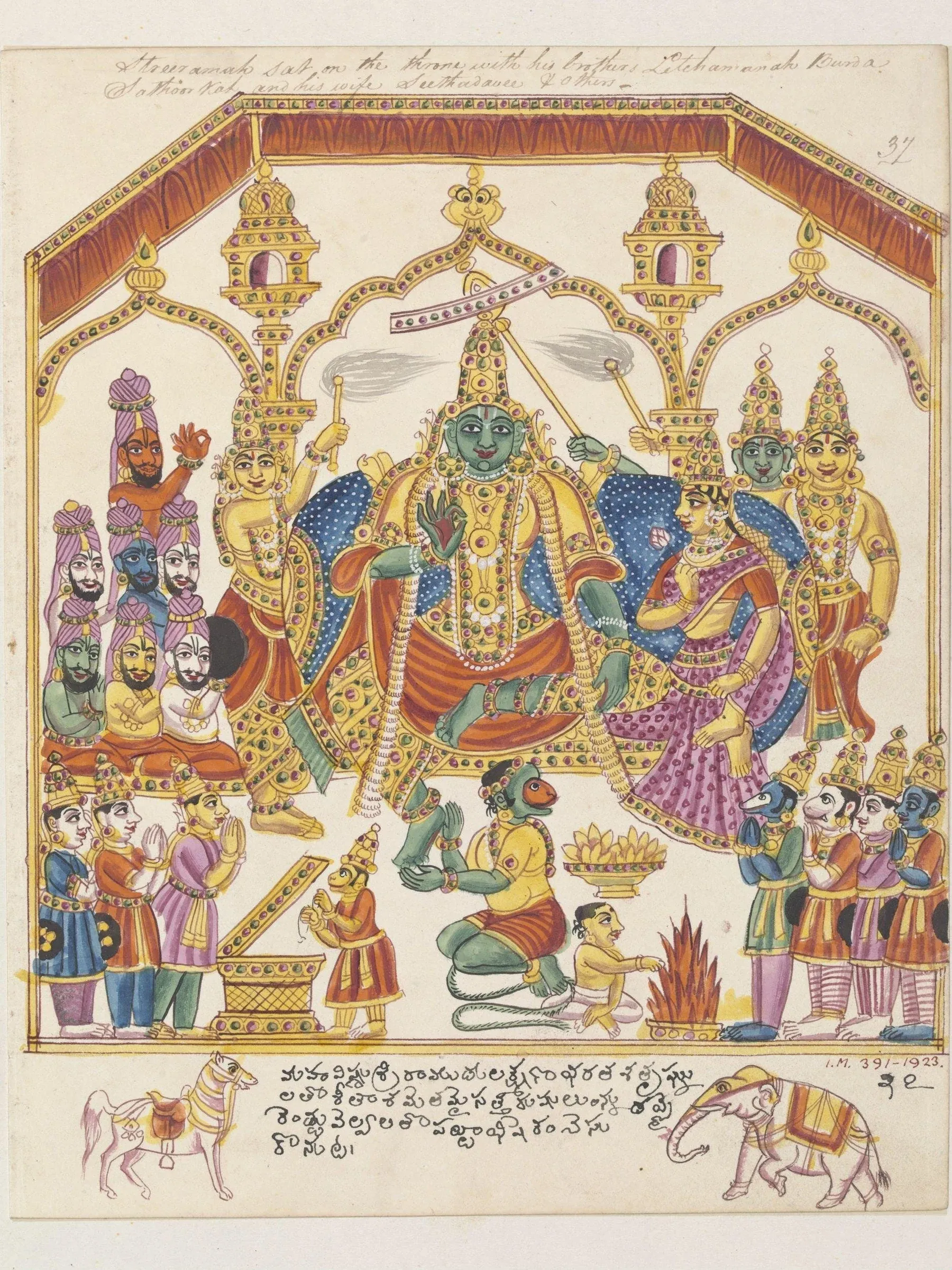
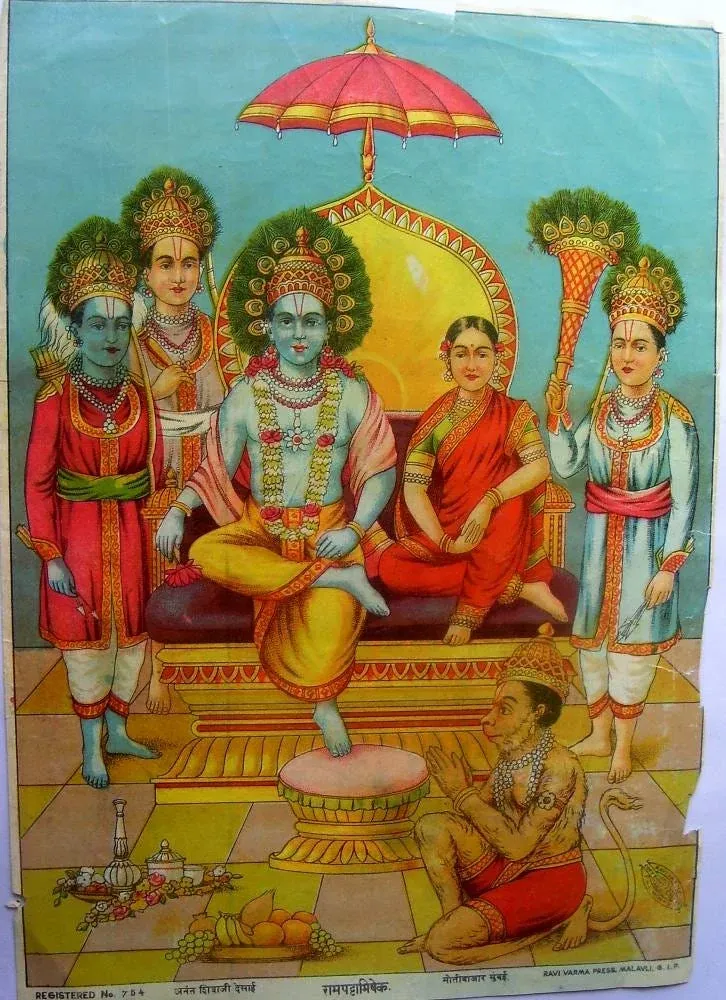
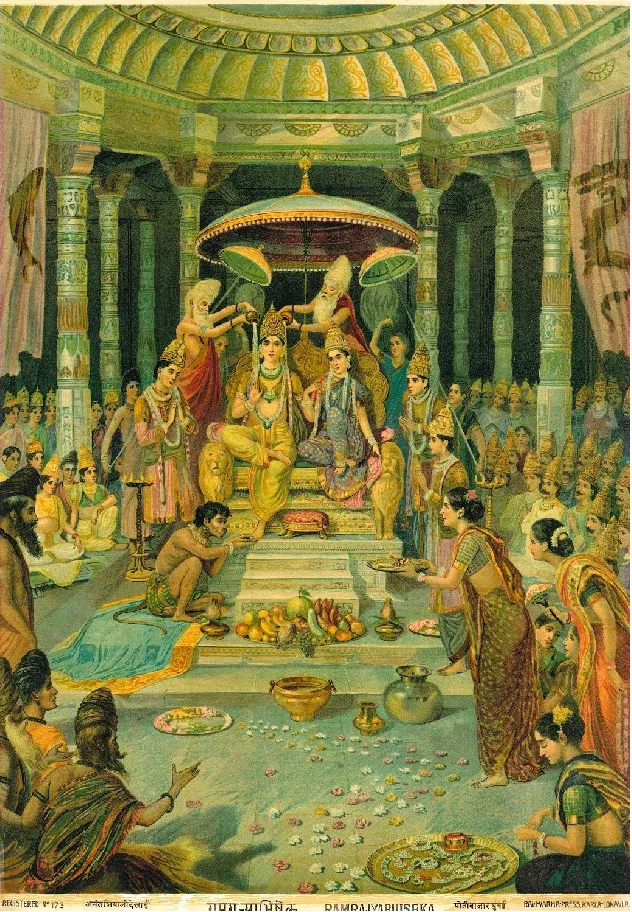
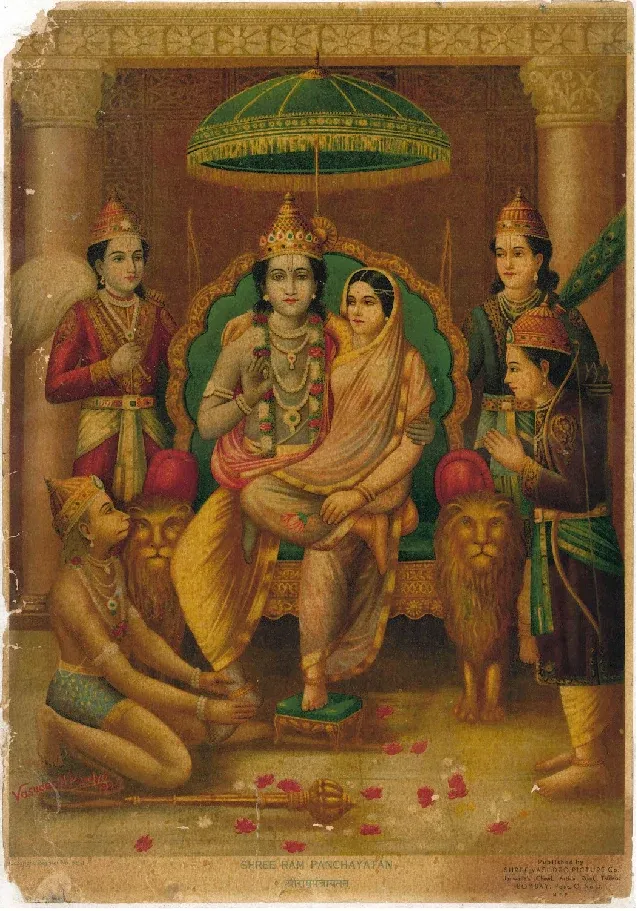
Representing and recollecting important events such as Rama’s Pattabhisheka is a common phenomena in cultural tradition of Hinduism. This is a way to protect, preserve and communicate the importance of such events and the necessity to document them. Not just paintings, such events are seen etched in stone as the sculptures on temples which speaks of the magnitude of belief that it holds.