Princess Victoria Gouramma: Shipped from India to England
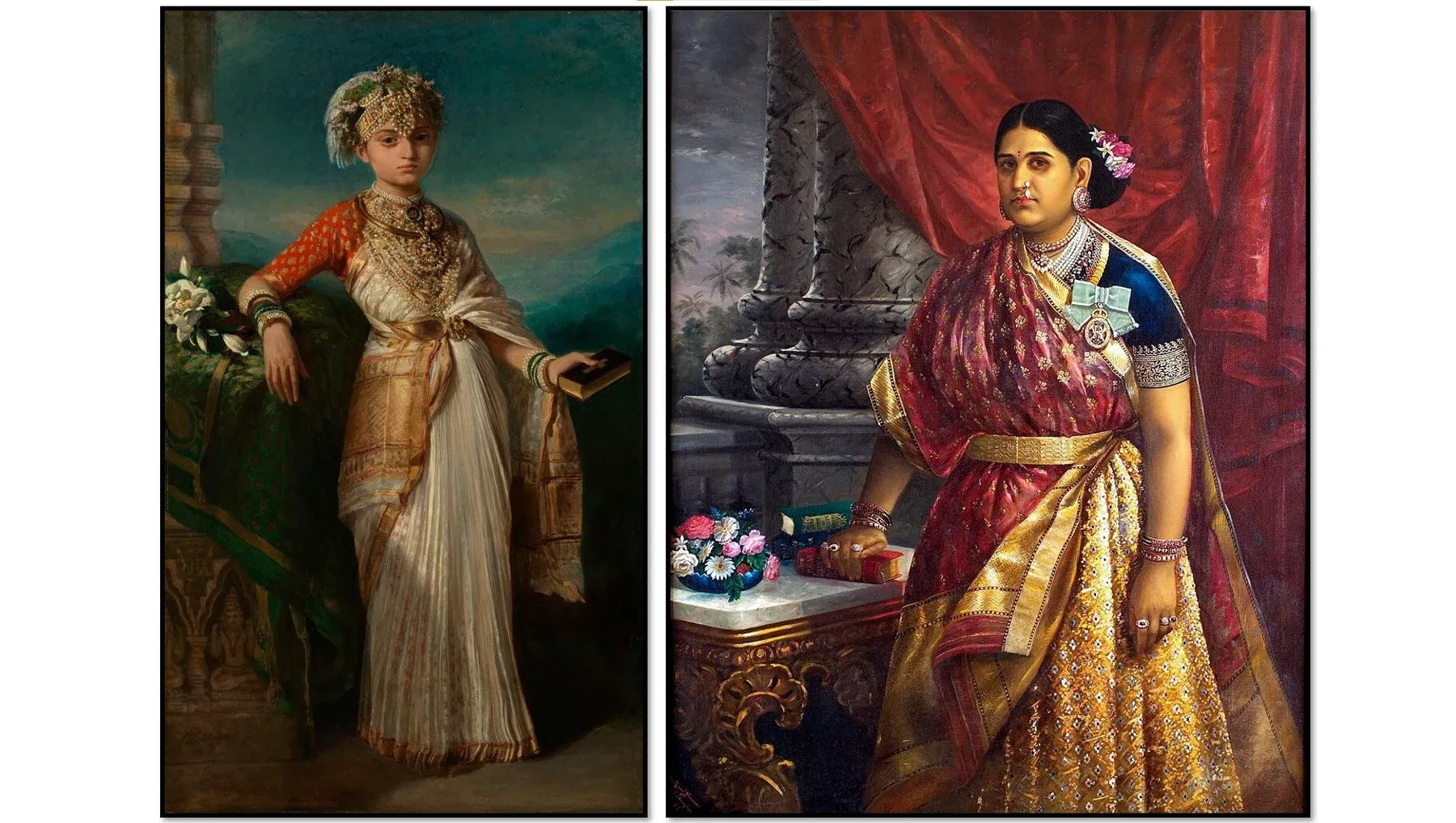
Here are two paintings of Indian royalty adored with beautiful sarees and gold jewelry in a European aesthetic of colors and art style. If you know a little about the art history of India, who would you say painted these portraits? A very common and expected answer would be Raja Ravi Varma, especially because of the art style and popularity he had for his European-inspired painting style during the 19th century in India. I came across this confusion by Indians on Pinterest who were certain it was Raja Ravi Varma, and I had to clear the air.
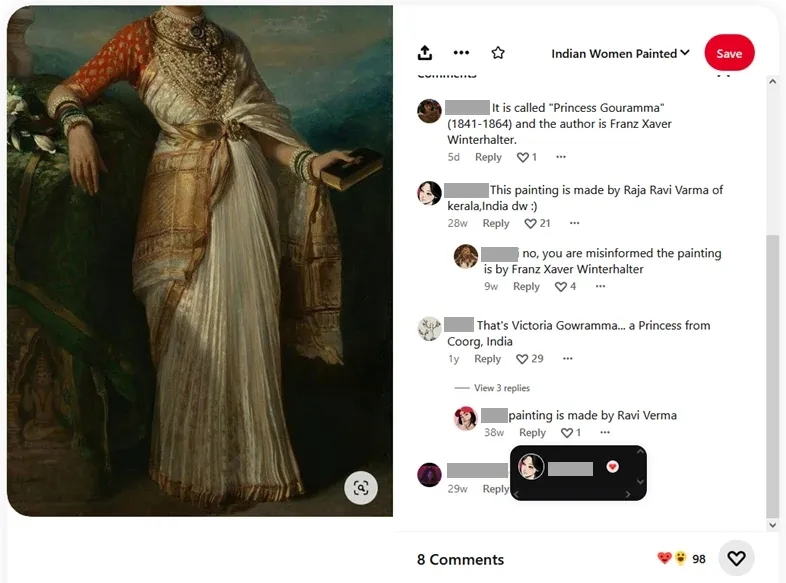
The answer is partially correct; Raja Ravi Varma painted the picture on the right. The queen painted here is Rani Bharani Thirunal Lakshmi Bayi of Travancore, sister of Ravi Varma’s wife, who was adopted into the Travancore Royal family, making her a queen.
However, the painting on the left is of Princess Victoria Gouramma, painted by Franz Xaver Winterhalter, a German painter known for his flattering portraits of royalty and upper-class society in the mid-19th century. This painting of Princess Victoria Gouramma was commissioned by Queen Victoria herself for the Princesses’ corridor at Buckingham Palace.
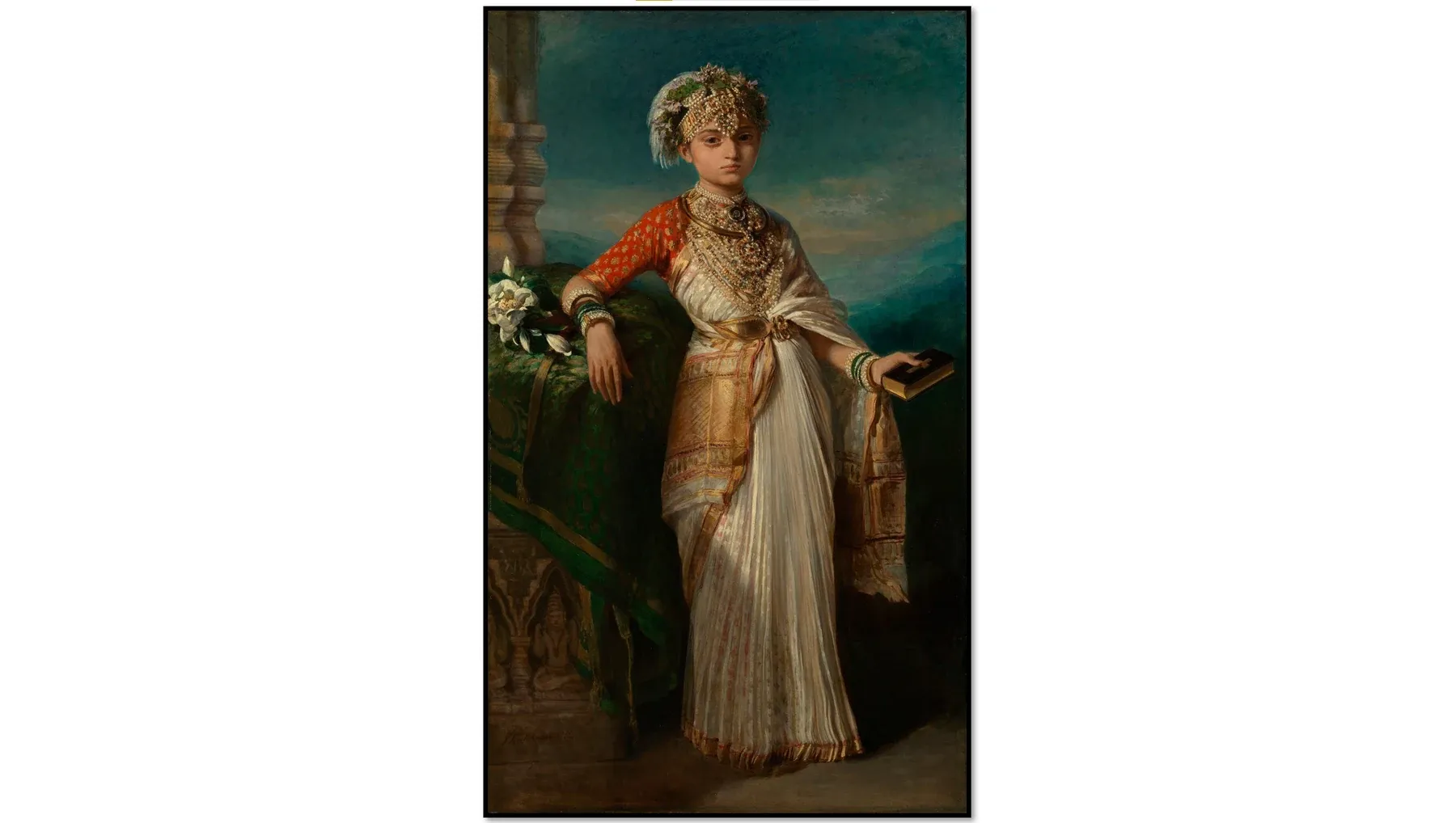
In the painting, the young Princess is wearing an off-white silk saree with a red blouse with gold borders and details. The dress, along with her jewelled headdress and other ornaments, speaks of her royal status and Indian roots. Her right hand rests on a half-covered sculpture, seemingly stone, that appears to be a part detached from a Hindu temple, especially the details of the relief below. Interestingly, she holds a bible in her left hand that is shown in great prominence.
What is intriguing is: “Who was Princess Victoria Gowramma?” And “what was this painting doing at Buckingham Palace? And “why does she hold a Bible?” Here is what I know.
Princess Victoria Gouramma: Shipped from India to England
The story of young Indian Princess Gouramma is often lost in the history of colonial politics. Gowramma was born to King Chikka Virarajendra, the last Maharaja (King) of Coorg, a small kingdom in southern India. The British East India Company seized control of Coorg in 1834, which led to the deposition of her father and the exile of the royal family. The young princess’s life in exile began at this moment.
Chikka Virarajendra offered Gouramma to be taken under Queen Victoria’s patronage as a strategic move, commonly interpreted as an effort to win over the British. As a sign of her family’s and kingdom’s surrender to British control, Gouramma was taken to England in 1852, when she was just eleven years old. For the little princess, this voyage represented a major cultural and emotional upheaval in addition to a physical migration.
Upon her arrival, Queen Victoria showed great interest in Gouramma, christening her Victoria in her honor and taking on the role of godmother during her childhood. The princess was brought up to follow the rules set down by the British nobility, with an education and way of life typical of the wealthy Victorian era. Her story was used to illustrate the British Empire’s “civilizing mission,” which was used to rationalize colonial authority by claiming it was for the benefit of society and culture.
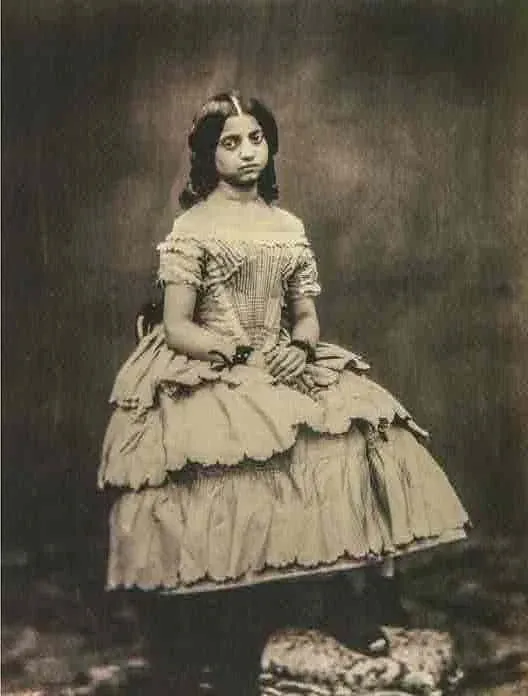
Gouramma had a difficult existence in England, despite all the advantages. The separation from her homeland and the erosion of her cultural identity were challenges she struggled to overcome. Her journals and letters show that she was lonely and missed her home in Coorg. She was never really British or Indian, and as she got older, she felt stuck in the middle.
A troubled marriage to Colonel John Campbell and an estrangement from her father were two of the personal issues that plagued Gouramma in her later years. In 1864, she was only 23 years old when she died. Despite its brevity, her life narrative sheds light on the personal toll of political allegiances and the intricacies of colonial relationships, but also on a forgotten young girl.
References
- Chandrica Barua, “‘Poor little princess’: Queen Victoria’s Court as a Site of Imperial Conquest”, Cahiers victoriens et édouardiens [Online], 97 Printemps | 2023, Online since 21 March 2023, connection on 21 January 2024. URL: http://journals.openedition.org/cve/12760; DOI: https://doi.org/10.4000/cve.12760
- Belliappa, C. P. Victoria Gowramma: The Lost Princess of Coorg. New Delhi: Rupa Publications, 2010.